


 8 mins read
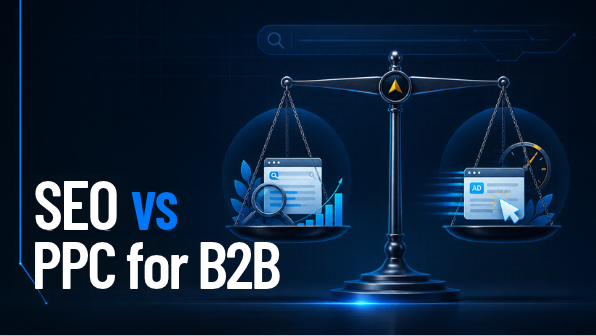
SEO and PPC solve different parts of the same B2B growth problem. SEO builds organic visibility that can compound over time. PPC buys immediate access to search demand and targeted audiences. The useful question is rarely “Which one is better?” It is “Which job should each channel do for this market?”
The practical version: Use PPC to capture and test demand quickly. Use SEO to build durable visibility and authority. Use both when the same high-value buyer journey deserves immediate coverage and long-term ownership.
SEO vs PPC: the simple difference
| Area | SEO | PPC |
|---|---|---|
| Speed | Usually slower to build | Can generate traffic immediately after launch |
| Cost model | Investment in content, SEO, links, and site quality | Media spend plus management and creative |
| Compounding | Strong pages can keep earning visibility | Traffic normally stops when spend stops |
| Testing | Slower feedback | Fast feedback on keywords, offers, and landing pages |
| Best use | Durable discovery and authority | Immediate demand capture and controlled testing |
When SEO should lead
SEO deserves priority when the market has sustained search demand and the business can create genuinely useful pages that deserve to rank.
- buyers research heavily before speaking with sales
- the company has multiple commercial topics to own
- paid search costs are high
- content can demonstrate real expertise
- the business can wait for compounding growth
- organic discovery can support multiple geographies or use cases
Our B2B SEO strategy guide explains how commercial pages and expert content should work together.
When PPC should lead
PPC is usually the better starting point when the business needs fast market feedback or wants to capture existing demand immediately.
Google describes Search campaigns as a way to show ads to people actively searching for products and services. That makes paid search particularly useful when high-intent search demand already exists. See Google’s current Search campaign guidance.
- the company is entering a new market
- the offer needs fast validation
- high-intent keywords exist
- SEO visibility is currently weak
- the sales team needs near-term lead flow
- the company wants to test landing pages or messaging before investing heavily in content
Why B2B companies often need both
SEO and PPC become more useful when they share information.
PPC can tell you which search terms convert, which messages resonate, and which landing pages create better lead quality. SEO can then build durable pages around validated themes.
SEO can also identify topics and commercial questions that deserve paid coverage while organic rankings are still developing.
That feedback loop is far more useful than running the channels as separate departments with separate definitions of success.
Use PPC to validate SEO opportunities
Suppose a B2B company wants to rank for a competitive service keyword. Before spending months building content around it, PPC can help test whether the search traffic matches the ICP, whether the landing page converts, whether buyers become MQLs or SQLs, and whether the opportunity size justifies the competition.
This does not mean paid performance predicts organic performance perfectly. It means the business can reduce uncertainty before making a larger content investment.
Use SEO to reduce long-term dependence on paid clicks
Paid search becomes expensive when the company has to buy every visit forever.
- service terms
- comparison terms
- implementation questions
- industry use cases
- problem-stage searches
- category education
The goal is not necessarily to replace PPC. It is to own more of the buyer journey so paid media is not carrying the entire acquisition burden.
Compare channels using pipeline, not clicks
SEO and PPC should be judged against comparable business outcomes.
- MQLs
- SQLs
- opportunities
- pipeline created
- revenue contribution
- cost per SQL
- cost per opportunity
Our B2B marketing attribution guide explains why sourced and influenced pipeline should be kept distinct when comparing channels.
Do not compare SEO cost with media spend alone
A common mistake is to compare PPC media spend with “free” organic traffic.
SEO has real costs: strategy, content, technical work, design, subject-matter input, link earning, tooling, and time. PPC also has more than media cost: management, creative, landing pages, tracking, CRM feedback, and optimization.
Compare total investment against qualified pipeline over a sensible time horizon.
SEO vs PPC by business situation
| Situation | Best starting point | Why |
|---|---|---|
| New offer, unknown conversion quality | PPC | Faster feedback on demand and landing-page fit |
| High CPC market with stable demand | SEO + PPC | Capture now while building organic ownership |
| Long research-heavy sales cycle | SEO | Content can support multiple evaluation stages |
| Immediate pipeline gap | PPC | Paid search can reach active demand faster |
| Strong domain, weak commercial content | SEO | Existing authority may unlock commercial growth quickly |
How Google Ads and SEO should share keyword intelligence
Google Ads search terms can reveal language buyers actually use. SEO keyword research can identify broader categories, comparisons, and long-tail topics that may be too expensive to test fully through paid media.
- Find high-intent commercial themes through B2B keyword research.
- Test priority themes with paid search.
- Compare lead quality, not only conversion rate.
- Build SEO assets around validated commercial opportunities.
- Continue paid coverage where the economics remain strong.
Landing pages matter to both channels
PPC often reveals conversion problems faster because every click has a visible cost. SEO can hide the same weakness behind growing traffic.
Both channels need clear positioning, specific service fit, proof, relevant CTAs, qualification, and a fast mobile experience.
That is why B2B conversion rate optimization should sit between acquisition and pipeline reporting.
A practical 90-day SEO + PPC plan
Days 1 to 30: Identify high-intent themes, fix tracking, improve landing pages, launch controlled PPC tests, and audit the current SEO footprint.
Days 31 to 60: Use paid data and search research to prioritize commercial SEO pages, comparison content, and supporting guides. Improve negative keywords and lead qualification in paid campaigns.
Days 61 to 90: Compare MQL, SQL, opportunity, and pipeline performance by theme. Keep paid coverage where it creates efficient demand and invest SEO resources where long-term ownership is commercially justified.
Frequently asked questions
Is SEO better than PPC for B2B?
Not universally. SEO is stronger for durable organic visibility; PPC is stronger for speed, controlled targeting, and testing. Many B2B companies benefit from using both against different jobs.
Should a new B2B company start with SEO or PPC?
If there is active search demand and the company needs fast feedback, PPC is often the better starting point. SEO should usually begin in parallel because organic visibility takes time to build.
Does PPC help SEO rankings?
Buying ads does not directly buy organic rankings. PPC can still help SEO strategy by revealing search terms, offer response, landing-page performance, and commercial intent.
Can SEO replace PPC?
Sometimes SEO can reduce paid dependence for mature topics, but paid search may remain valuable for competitive terms, launches, new markets, branded defense, and periods when organic visibility changes.
Example: how the decision changes by business stage
Suppose a B2B software company has almost no organic visibility but knows buyers actively search for its category. PPC should probably do more of the early heavy lifting because the company needs fast market feedback.
Now suppose the same company has spent six months learning which search themes create good SQLs. That paid data can shape the SEO roadmap. Instead of writing broad educational content because a keyword tool says it has volume, the company can build pages around themes already proven to attract serious buyers.
A year later, some of those pages may rank consistently. PPC does not suddenly become useless. The company can reduce spend where organic coverage is strong, keep paid coverage on high-value or highly competitive terms, and use paid campaigns to test new offers or markets.
A simple decision checklist
- Need results this quarter? PPC deserves more weight.
- Have a long research-heavy buying cycle? SEO deserves more weight.
- Entering a new market? Use PPC to test before building a large organic footprint.
- Paying heavily for the same search themes every month? Build SEO assets around the proven winners.
- Traffic is growing but pipeline is not? Fix conversion and qualification before adding more of either channel.
- Search demand is weak? Neither SEO nor paid search alone will manufacture category awareness. Add demand creation through channels such as LinkedIn, Meta, partnerships, video, or expert content.
How to split budget without pretending there is a universal formula
There is no responsible percentage split that works for every B2B company. A 70/30 SEO-to-PPC mix can be sensible for one business and ridiculous for another.
Start with the job that needs doing. If the pipeline gap is immediate, fund paid demand capture properly. If the company is over-dependent on expensive clicks, invest in organic ownership. If both are true, use paid search for near-term coverage while building SEO around the same commercial themes.
Final takeaway
SEO and PPC are not rival religions. They are acquisition tools with different economics and time horizons.
Use PPC to capture and test demand quickly. Use SEO to build durable visibility and authority. Connect both to the same CRM and pipeline outcomes, then let commercial evidence decide the mix.